Every week I talk to a winery that has just received the right email. An importer in Chicago, a distributor in Copenhagen, a buyer for a retail chain in Korea writing: "could you send us samples?".
And every week I see the same scene afterwards: two weeks to organise the shipment, a courier invoice higher than the value of the wine, and a buyer who has tasted something else in the meantime.
Shipping wine samples abroad can be done well. But there are 5 points where the sample gets lost, and I've seen all of them.
1. Wine is not a parcel
The first mistake is treating a sample like a parcel. Wine is an excise good, and that holds even when the label says "sample, not for sale".
Inside the EU, B2B shipments travel with documents that accompany the goods (the electronic excise system, with its acronyms: e-AD under duty suspension, e-DAS for duty-paid product). Outside the EU you need a customs declaration and, in many countries, a licensed importer to receive the goods. In the United States, for instance, samples only enter through an authorised party.
Practical advice: before you even choose a courier, ask the buyer who their importer is and which paperwork they want the samples to arrive with. Half the problems end there.
2. The right courier (and the one that sends the parcel back)
The big express couriers accept alcohol, but only from senders enrolled in their dedicated programmes and to approved countries. In Italy, the postal service doesn't. Many wineries find out when the parcel comes back.
If you ship samples regularly, work with a forwarder who already has an active alcohol account and knows which destinations are "easy" and which aren't. It costs a bit more per shipment and saves weeks.
3. Packaging: the cost nobody budgets
A 750 ml bottle shipped safely needs an insert with dividers, often polystyrene or moulded cardboard, and an outer carton. It's heavy, it's bulky, and express rates are calculated on volumetric weight.
Three bottles to the United States often weigh over 5 kg packed. That's where transport costs overtake the value of the wine.
4. How many bottles you really need
A serious buyer tastes. They don't drink. To evaluate a wine they need 100 ml, a properly poured glass.
Yet the standard request remains "two bottles per wine", because it's the only format wineries have. With 6 wines that's 12 bottles: about 9 litres of wine and a 15 kg parcel so that one person can taste 600 ml.
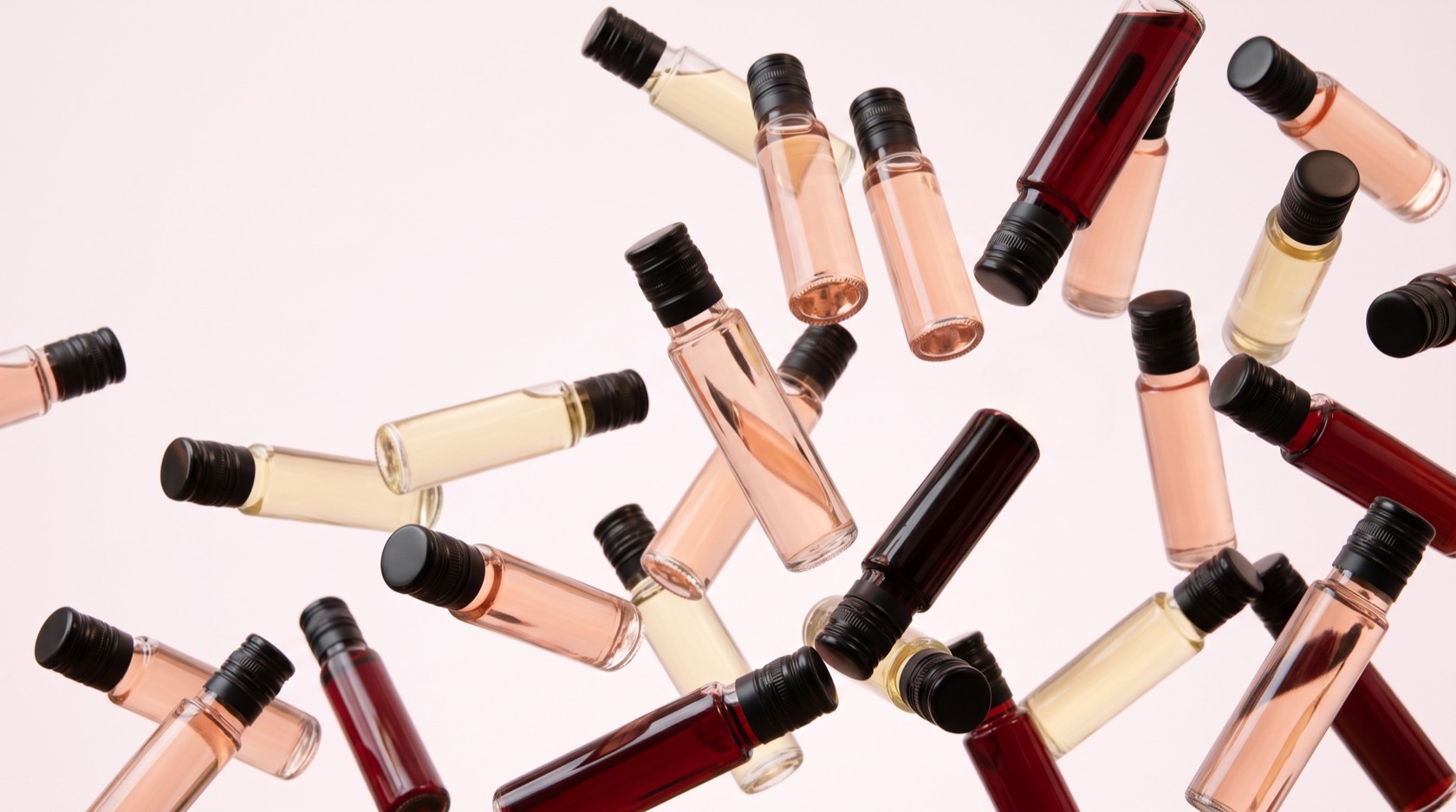
This is the point Somelì was born on. We fraction the bottle into 7 tasting experiences of 100 ml with Coravin Vinitas® technology, in an inert atmosphere: the wine stays intact for over 12 months. One bottle becomes 7 buyers. Six wines become a box under one kilo.
5. Under 100 ml the rules change
One detail is worth the whole guide. 100 ml is the limit for liquids in cabin luggage. Your export manager can carry the entire range in hand luggage to a fair or a meeting, without shipping anything.
And when you do ship, the small format fits express services that are more complicated with full bottles. Excise and customs rules stay the same, nothing disappears: what changes is the weight, the volume, and the number of buyers you reach with the same wine.
A checklist before shipping
Before every sample shipment abroad I check: the name of the importer or receiving party, the excise paperwork agreed with the forwarder, a pro-forma invoice with the correct declared value, approved packaging, a label with mandatory information and, inside the box, a note with the vintage and the sales contact. The buyer must be able to reorder without looking for you.
What we do
Somelì handles the whole process: the winery sends us the bottles, we fraction them, label them with its brand, prepare the digital tasting note and ship to the winery or directly to buyers. To see how much changes on your numbers, the sampling calculator uses your volumes and your markets. If you'd rather talk, a quote arrives within 48 working hours.

Somelì is an Italian wine-tech company based in Milan, founded in 2024 by Filippo Verde and Sofia Gregorio. It turns one bottle of wine into seven 100 ml tasting experiences using Coravin Vinitas® technology, for which it holds the exclusive European licence.
About us →