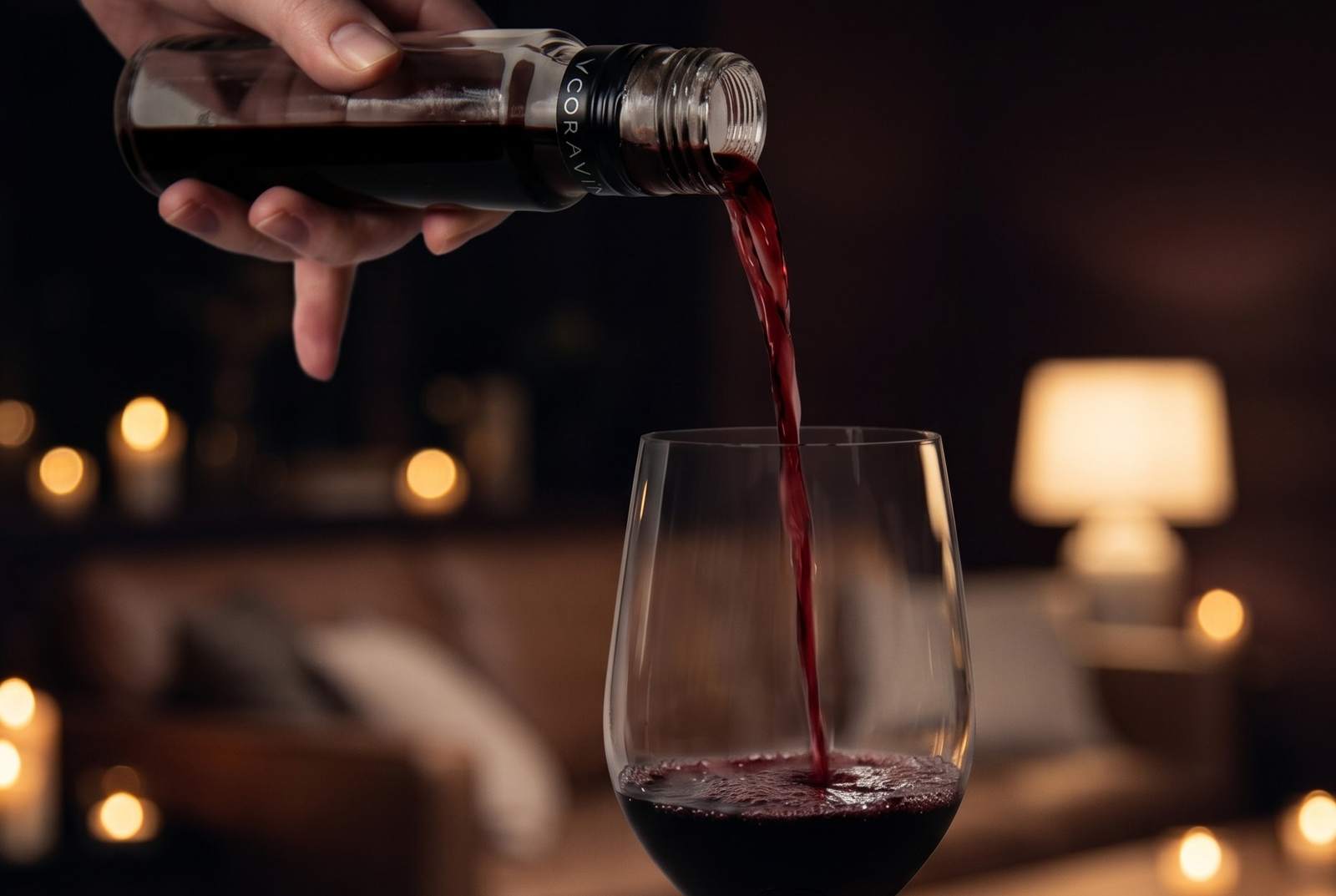
I see it every time I sit down at a table. It starts with a sparkling wine, then a white with the starter, a red with the main, maybe a sweet wine at the end. All by the glass, all in small pours. The bottle for the table, the one ordered for everyone and shared until dessert, I see less and less.
The numbers say the same. In high-end restaurants 31% of guests already prefer the glass, and among younger drinkers it's the default. And Liberty Wines, in its 2026 report on premium restaurants, writes that the group ordering a bottle to share has given way to individuals each choosing their own glass.
The glass has stopped being a courtesy option. It's become the normal way to drink out.
A consumer who wants to choose
Today's drinker wants to take a journey through dinner, and wants to do it without committing to a single bottle. By the end of the evening they've spent roughly the same amount. The difference is that they decided what to drink, course by course, and tasted 4 wines instead of 1.
They drink less, but with more attention, and for quality they're willing to pay. Less wine, better wine.
And then there are the laws
It would be convenient to blame everything on Italy's new highway code. The legal alcohol limit hasn't changed, penalties and checks have, and that was enough: drops of 10% to 20% on alcohol in many restaurants, guests stopping at the first glass.
But the laws only sped things up. Wine sold in restaurants has been falling for a decade, because people drink more and more of what they buy at home. The glass is the restaurant's answer to falling consumption.
Who holds, and who falls behind
The restaurant holds. It sells less wine than before, but the same wine poured into 5 or 6 glasses yields more than the bottle, and in the end it breaks even: the glass preserves its margin in a shrinking market.
Wineries and distributors, on the other hand, fall behind. The bottle leaves the winery at the same price as before, the mark-up on the glass is created entirely in the restaurant, and fewer bottles get sold. In the US, restaurants have lost 26% of their wine sales since 2019. In Italy the picture is softer, but the direction is the same.
Same price as before. Fewer bottles.
The glass has moved the value into the wine glass. Wineries and distributors, however, are still selling bottles.
Going to get the glass back
If the value has moved into the glass, the winery has 2 ways to go and get it. And they're the 2 ways we use the 100 ml tasting experiences every day.
The first is to be in more places. In a market where people drink less, selling more means being present in more markets, which means going abroad. The problem is that every bottle opened for a buyer, an importer or a restaurateur is a bottle that doesn't come back, and shipping cases to the other side of the world costs money. With the 100 ml tasting experiences one bottle lands on the table of 7 different people, with the winery's label and the wine's tasting sheet, identical to how it was in the bottle thanks to fractionation in an inert atmosphere. Samples, export, presentations: the winery multiplies its presence while saving up to 85%.
The second is to sell the glass outside the restaurant. The minisize is what people are asking for, and yet almost nobody sells it. The winery can bring it straight to the consumer's home: one wine, a vertical, a selection from the range, to enjoy with the calm of a tasting and without having to open and finish a bottle. And the same goes for Ho.Re.Ca: in the hotels we already work with, the 100 ml format becomes the in-room tasting, the glass in the minibar, the welcome pour on arrival, always in the right condition and with no waste.
Restaurants, to survive, have to offer an experience guests can't replicate at home. For the winery the opportunity is the reverse: bringing the experience of the glass where the restaurant can't reach.
Consumers have already decided how they want to drink. Now it's the producers' turn.
What's the price of standing still in a market that moves fast?
Discover our solutionsSources: Liberty Wines, Premium On-Trade Wine Report 2026 · Federvini-Tradelab Observatory, June 2026 (Gambero Rosso) · Fipe-Uiv Observatory, Vinitaly 2026 (Gambero Rosso) · Sky TG24, January 2025 · The Drinks Business, May 2026

Somelì is an Italian wine-tech company based in Milan, founded in 2024 by Filippo Verde and Sofia Gregorio. It turns one bottle of wine into seven 100 ml tasting experiences using Coravin Vinitas® technology, for which it holds the exclusive European licence.
About us →